

What are agents?
Here is the anti-slop canon definition:
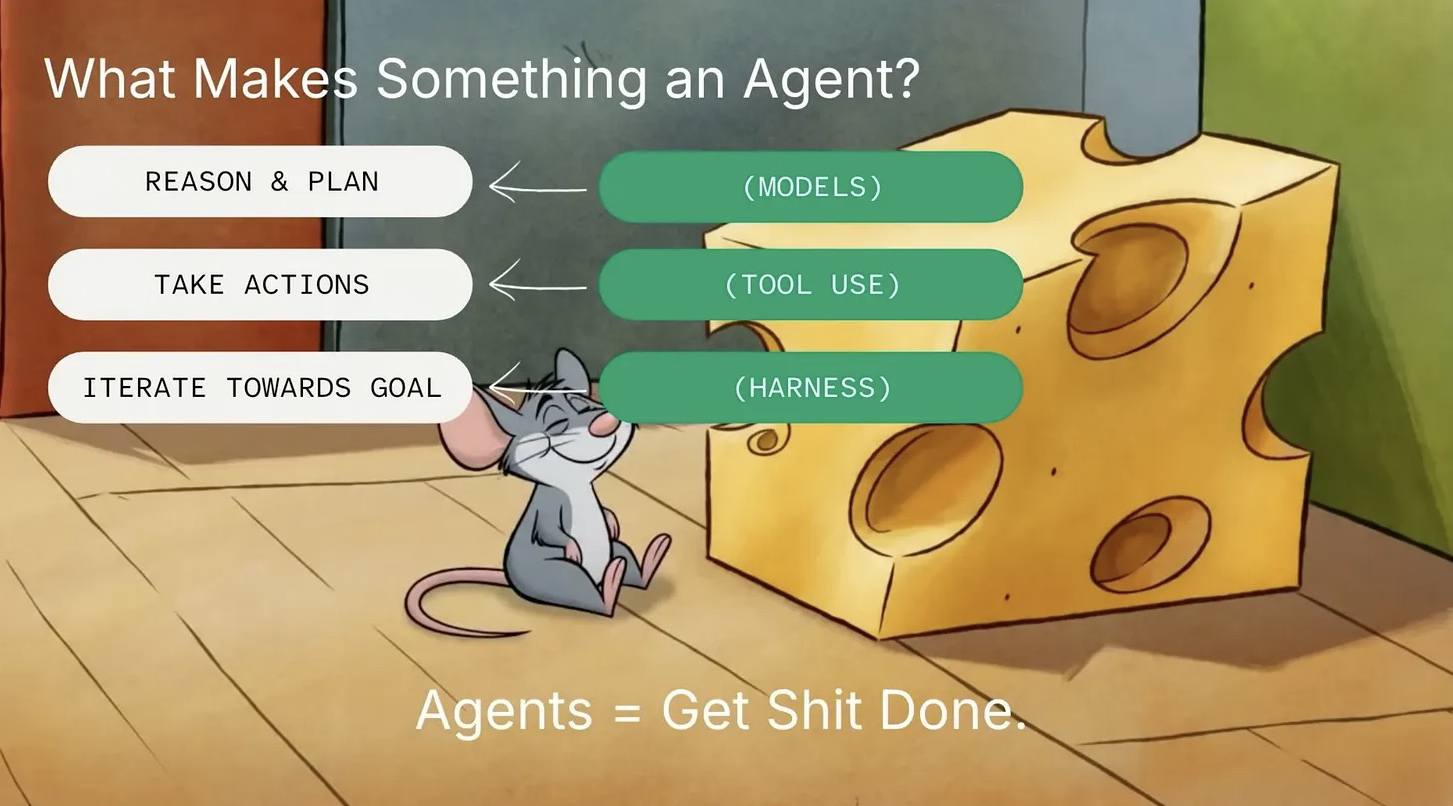
Agents = Get Shit Done
That's it. This is the only definition you need.
Agents do shit (mundane, rote, repetitive tasks) no human wants to do.
- If you're a salesperson, updating your CRM.
- If you're a recruiter, scanning 1000 resumes and sending 50 emails/texts every day, then reminders 24 hours later
- if you're a finance manager, daily bookkeeping and expense management
- if you're an IT technician, telling people to cycle their power and then updating your RMM and PSA for reporting purposes
At AI Ascent in April, Sequoia's Pat Grady (@gradypb) gave agents a working definition. An agent qualifies when:
- You can send it to do a job.
- It recovers when something fails.
- It keeps going until the job is done.
What's the best way to help agents get shit done?
They need to see exactly what tasks you can't stand doing. You need to show them that workflow, and provide context. This is the tricky part.
It takes a lot of time (meetings with management, and the actual people performing the tasks), you need a human in the loop (forward deployed engineer, or someone who understands AI implementation deeply), and then...
You can start to build the actual agent.
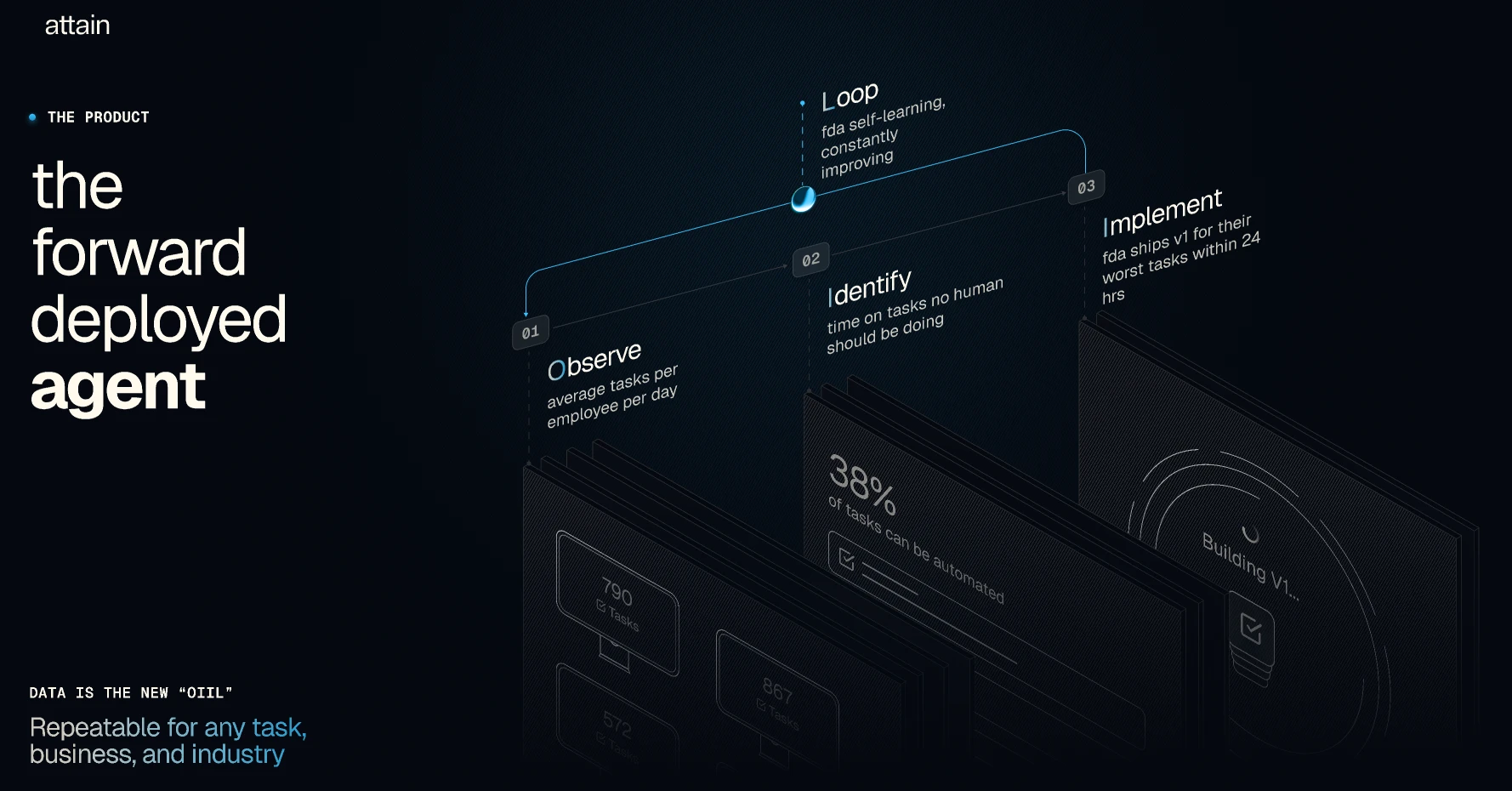
Tasks are step number 1. Task data is the new OIIL:
- Observe: count the average tasks per employee, per day.
- Identify: find the time spent on tasks no human should be doing.
- Implement: ship v1 for the worst tasks within 24 hours.
- Loop: keep learning and keep improving.
But the agent is still going to need training afterward. You have to onboard the agent.
Make sure you're monitoring and managing them actively. The loop phase is vital here. v1 of your agent is going to be buggy and clunky.
You have to crawl -> walk -> run -> fly. You have to iterate.
Here is a real-life example (and visual).
Take the SDR (sales development rep) who books meetings.
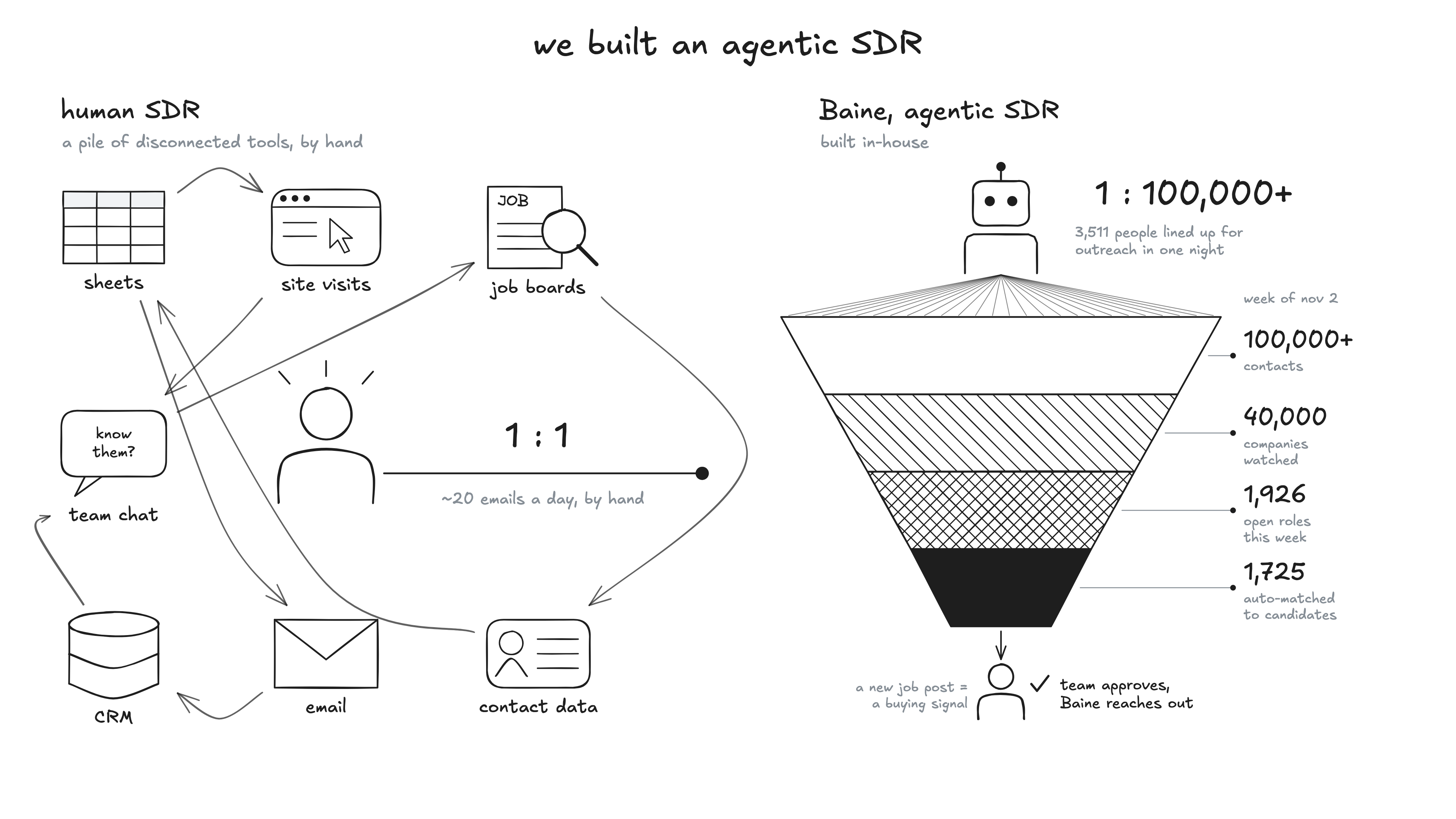
In 2021, the last time I built a go-to-market team (the old way), an SDR's day went like this:
- build an ICP list in a spreadsheet
- check who visited the website
- scan for intent on all socials manually
- ask the team chat whether anyone knew the buyer
- dig up an email
- try to somehow personalize the messaging
- log it all in the CRM,
- then send about 40 emails by hand
- make 125 cold calls
- track about 65% of what you did
- remember about 15% accurately
- Book 1 meeting/day (if lucky)
Booking the meeting was the part SDRs loved (and what they were paid to do) and it came last.
In the first week of November, Baine, our agentic SDR, monitored 40,000 companies (all in our ICP) and spotted 1,926 open roles, each one a buying signal. One night, it lined up 3,511 people for outreach.
And booked 4 meetings.
Agentically. (automatically) What Baine (our agentic SDR) does by itself would have taken a team of 15 back then.
That leaves 1 SDR free to book meetings all day.

This is the beauty of agents, they scale infinitely, and are excellent at executing tasks that humans don't want to be doing in the first place...
Yes - it's a PITA to train them....
Just like a new employee, you have to architect their task execution perfectly and onboard them iteratively (it takes time).
But once you do - they get shit done.


