
Hiring hasn’t changed much in decades. Recruiters wade through endless resumes, candidates struggle to showcase who they truly are, and companies rely on paid demos and clunky trial processes. We wanted to flip the script: create a platform that surfaces exclusive, vetted talent, highlights personality and skills, and streamlines the recruiting process. That vision became ReelCV.
Here’s how we built it, month by month, behind the scenes.
February – Where ReelCV Really Began
ReelCV started with a rough concept I shared on LinkedIn. I used AI to turn the idea into a first mockup, and it looks almost nothing like what we eventually shipped. That was the point: it gave us something concrete to react to, test, and improve.
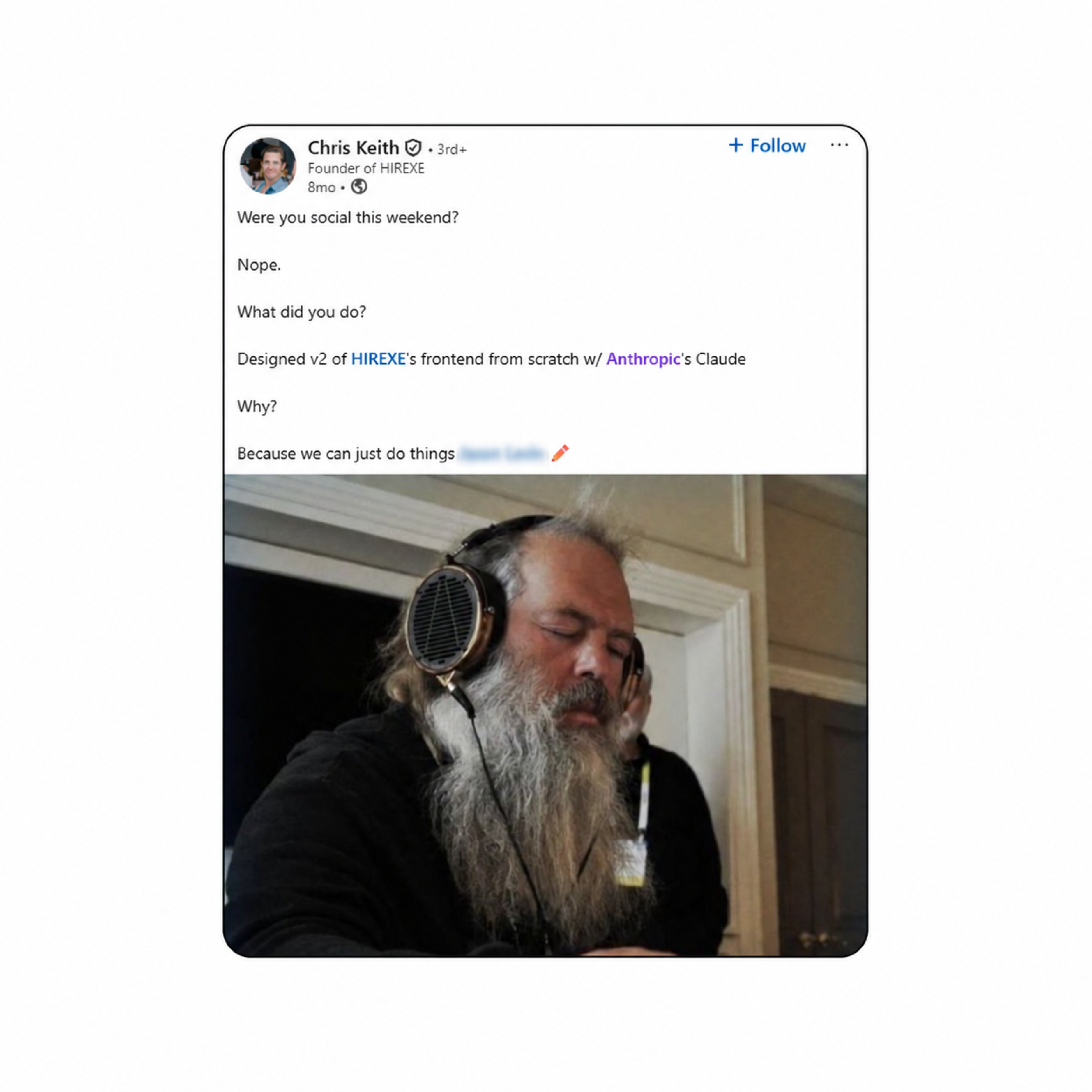
That first design was not meant to be polished. It was a starting point that helped us move from an idea in my head to something we could build.
What came next was six months of iteration. We kept the parts that worked, discarded the parts that did not, and let real feedback shape the product.
March – First Steps Toward ReelCV
March was when we started turning the concept into a real product. We focused on the foundations: profile scoring, recruiter workflows, and the first working version of the platform.
Profile Scoring Discussions
Early in the month, Ryan and I explored how recruiters actually evaluate candidates. We discussed profile scoring as a way to quantify both “red flags” and positive signals across a candidate’s career.
- Red flags: unexplained employment gaps, frequent job-hopping, short stints in multiple roles.
- Positive signals: long-term employment, steady progression, MSP-relevant experience.
-
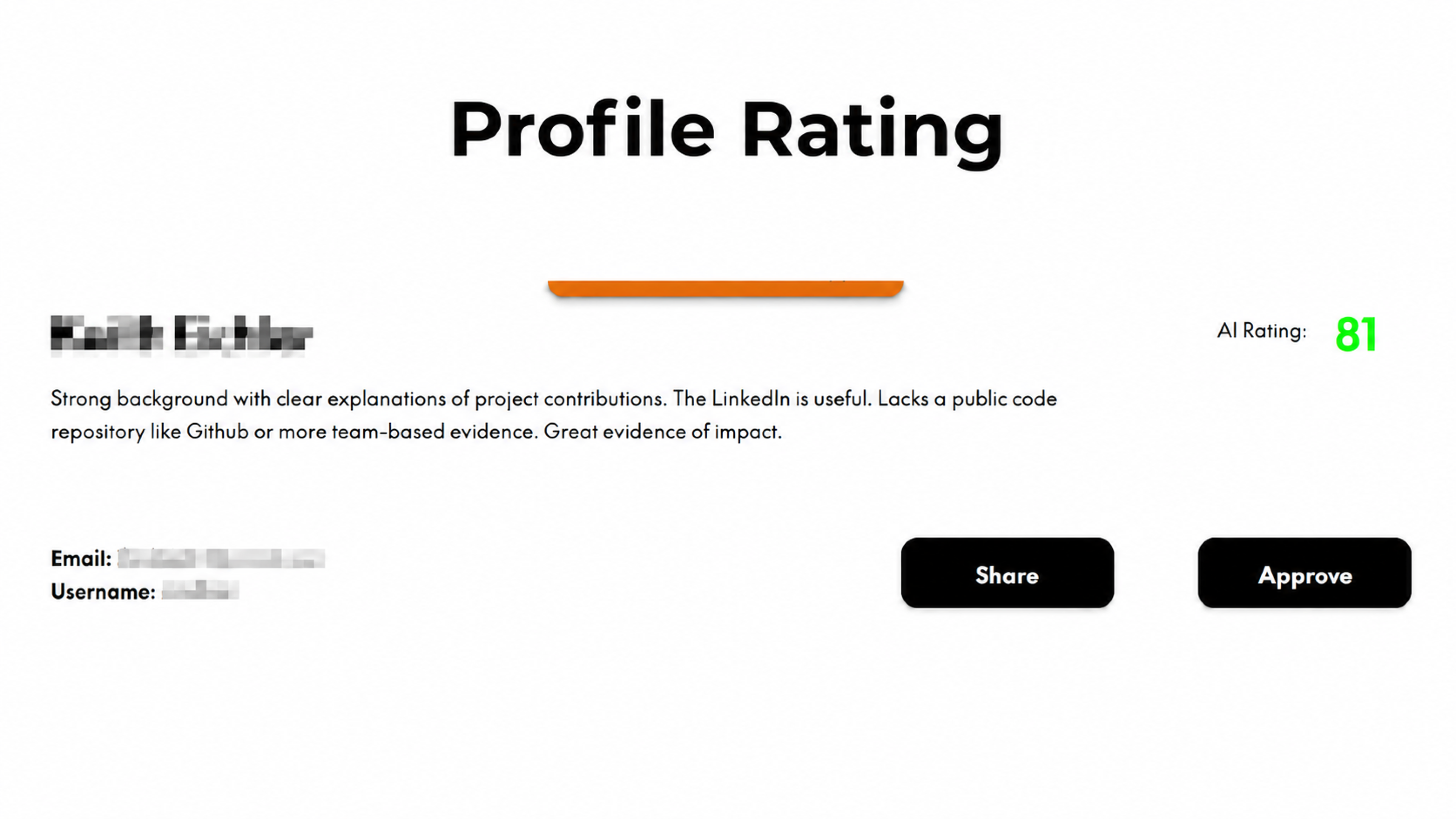
The goal was simple: instead of asking recruiters to scan manually for these patterns, ReelCV would apply weighted scoring automatically. It would surface the candidates most likely to succeed and flag potential concerns. That became one of the product’s most important differentiators: a data-driven way to evaluate people, not just paper resumes.
UX & Admin Improvements
Ryan had begun improving the user and admin experience inside the Hirexe platform. The focus was on precision over volume: rather than overwhelming recruiters with dozens of irrelevant candidates, the system would present a handful of highly relevant profiles.
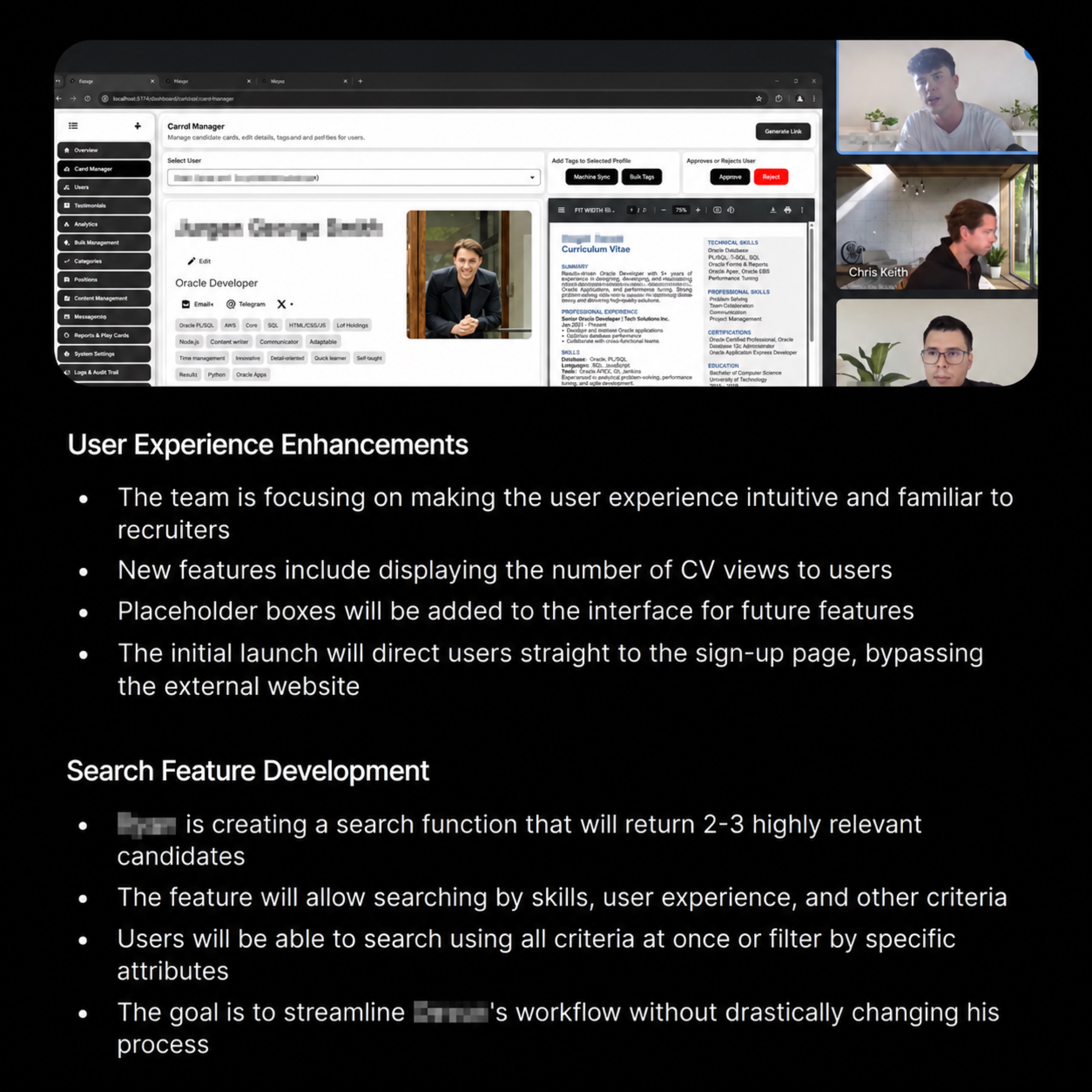
The work included:
- Flexible search filters combining multiple criteria.
- Mapping recruiter workflows through recordings to understand real usage patterns.
- Admin-side UX updates designed to save time without breaking existing recruiter habits.
- Early profile designs aimed at being both functional for recruiters and engaging for candidates.
This was the first step toward shaping ReelCV as a practical tool recruiters could adopt quickly, rather than a flashy product that disrupted workflows.
Layout Changes & Recommendations
I pushed for a clearer, more structured experience, including small usability details like CV view tracking. That feedback helped keep the product grounded in what recruiters actually needed, not just what looked good on paper.
Version 1 Goes Live
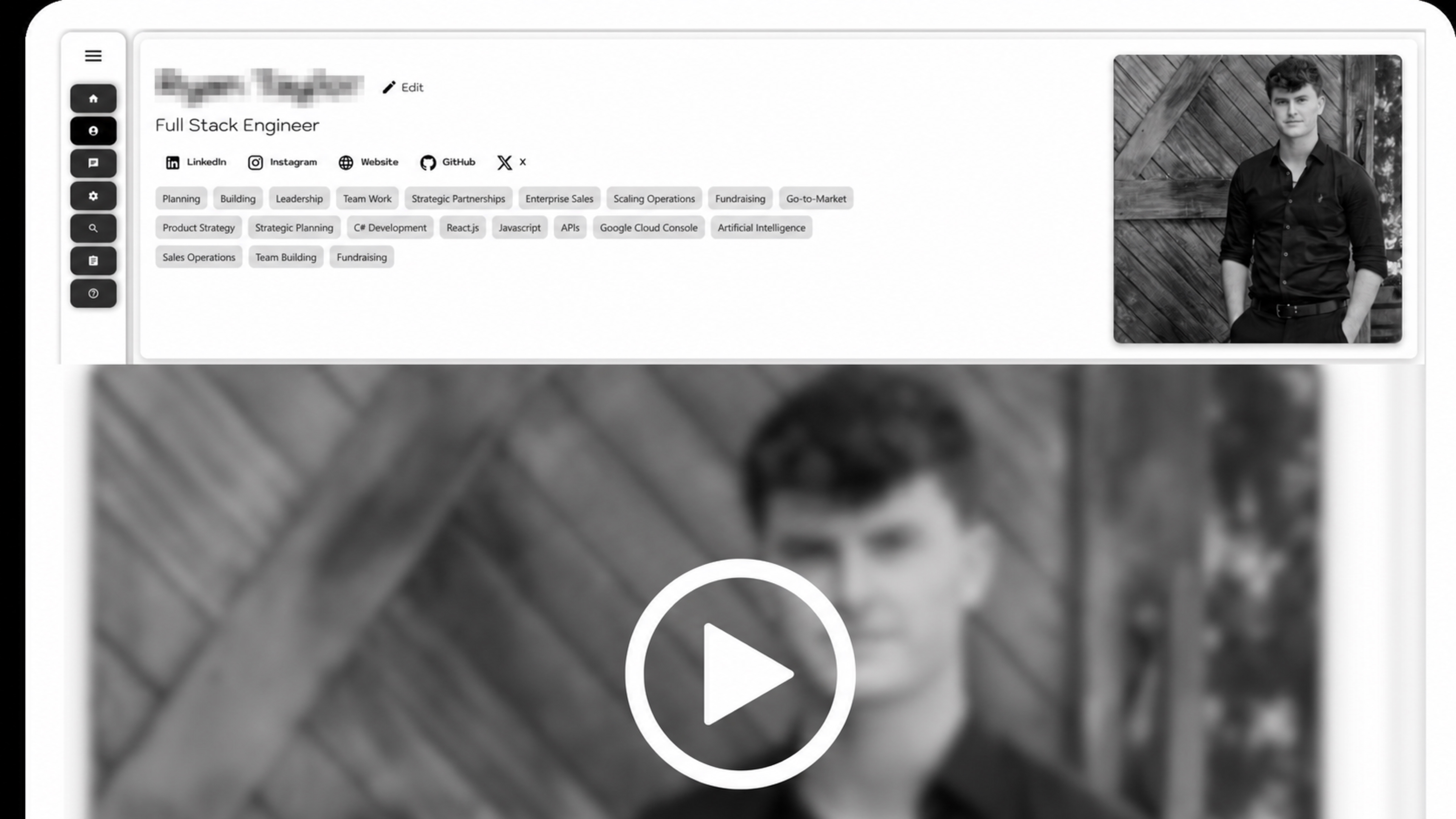
By March 15, ReelCV hit its first major milestone: V1 was ready. It was more than a prototype. It was the foundation for every iteration that followed. Recruiters could log in, create candidate profiles, and begin to see how ReelCV might reshape the hiring process.
Bottleneck: Video Uploads
A week later, however, a problem surfaced. Despite video being central to the ReelCV vision, candidates weren’t uploading their videos. Technical friction, strict validation, and unclear guidance caused drop-offs. Without videos, the “Careel” (career reel) concept couldn’t deliver on its promise of dynamic storytelling.
I flagged video uploads as a bottleneck. On March 20, Ryan made video a required step in profile creation.
That change increased adoption and ensured every profile included the feature that made ReelCV different.
Skills and Future Improvements
Toward the end of March, we started planning V2 improvements to how candidate skills were extracted, tagged, and presented. Those conversations set up the refinements we would make in April and May.

Takeaway
March was about building ReelCV’s foundation. We moved from scoring models and recruiter workflows to layout improvements and a working V1. Video uploads exposed gaps, but those gaps forced us to build a stronger product.
ReelCV had officially moved from idea to implementation.
April – Humanizing the CV
If March was about laying the foundation, April was about giving ReelCV a personality. We shifted from raw functionality to human-centered design, looking for ways to show candidates as more than static resumes and make the recruiter experience feel smooth, modern, and intuitive.
Early Homepage & Signup Flow
At the start of April, we reviewed the original homepage. It worked, but it felt more like a traditional database than a modern hiring platform. Ryan and I began redesigning the flow around search as the entry point. Recruiters would land on a search-driven homepage and start finding candidates immediately.
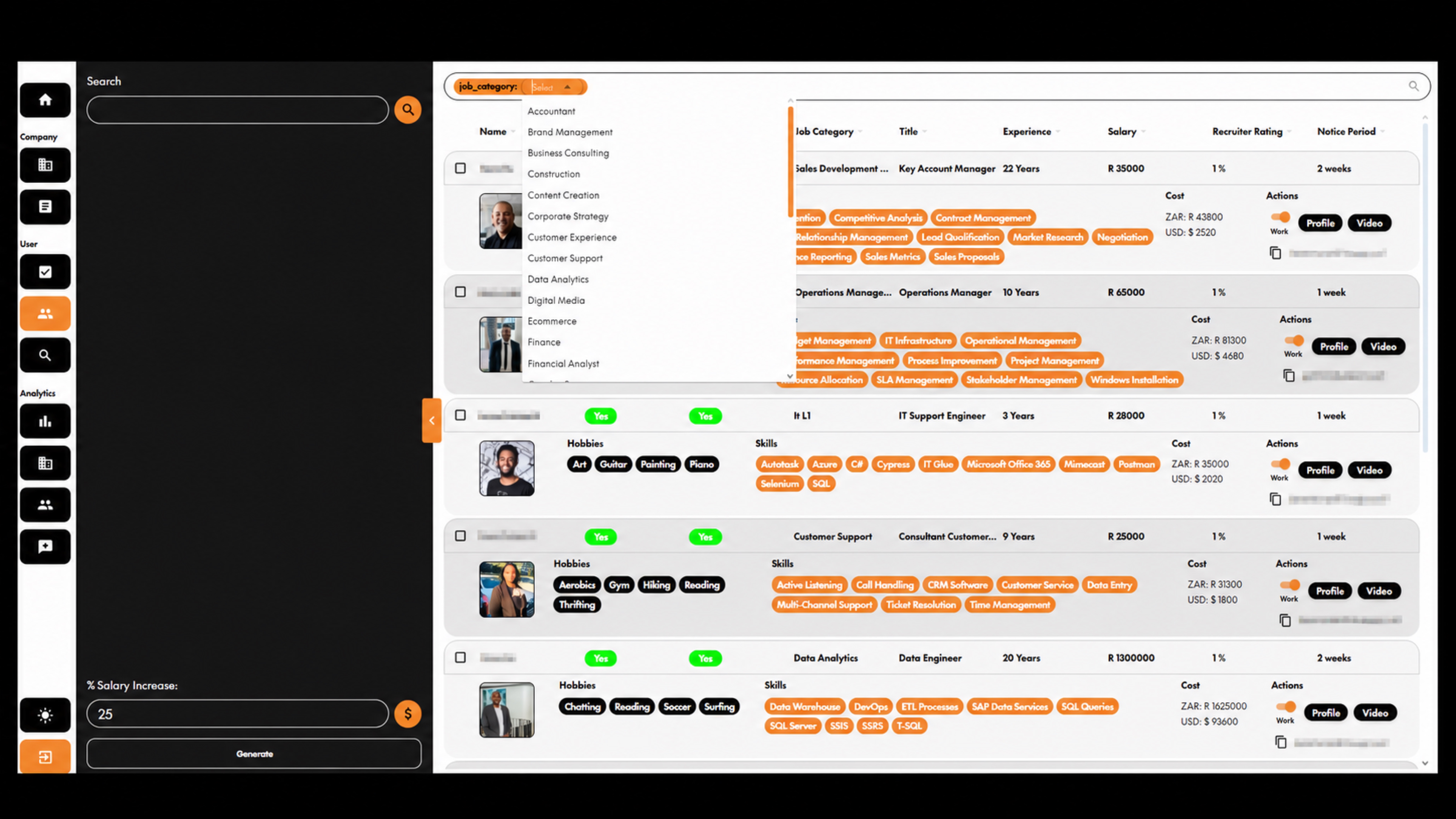
Ryan demonstrated updates that made the experience more engaging:
- Highlights during uploads kept users occupied while waiting, reducing friction.
- A revamped signup flow added steps for profile images, socials, CV uploads, and video capture, ensuring richer candidate data from the start.
- Company dashboards were redesigned around search functionality, making it faster for recruiters to move from AI Candidates Search → shortlist → interview.
The shift was subtle but significant: ReelCV started to feel less like a form-filling system and more like a dynamic tool that guided recruiters and candidates forward.
Personality Capture
By April 8, the conversation turned to one of the most defining elements of ReelCV: capturing personality.
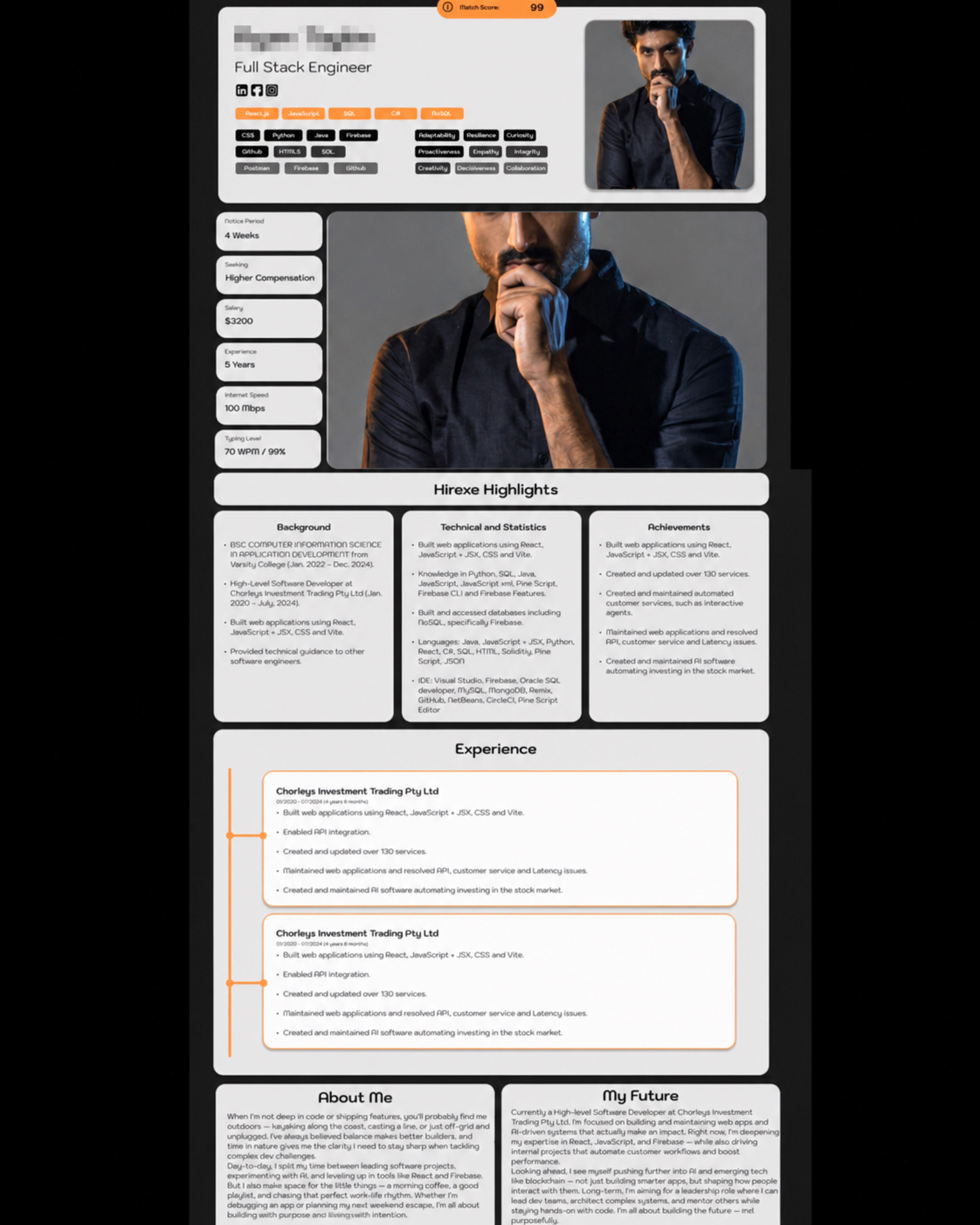
We debated how to move beyond credentials and show people as individuals. We landed on a new profile structure that highlighted hobbies, passions, and personality traits alongside professional skills. It included:
- Hobbies, an About Me section, and a My Future section.
- Structured sections like “Who I Am” to surface values and motivations.
- The ability to search by personality traits in the future, bringing culture into the match alongside skills.
.png)
This was a turning point. ReelCV was not just making recruiters more efficient. It was creating a more authentic, human-centered hiring experience.
Career Profile Evolution
By mid-April, we were refining the Career Profile, which became the centerpiece of the candidate experience.
Key updates included:
- Skills-first highlighting at the top, weighted against job matches.
- A streamlined layout with video prominently displayed and sections simplified into Background, Technical, and Achievements.
- A single left-hand timeline for career progression, replacing fragmented sections.
We also debated the value of fields like “About Me” and “My Future,” weighing authenticity against clutter. It was the same balancing act we faced throughout the build: depth versus clarity, personality versus professionalism.
Visual & Design Enhancements
As April progressed, Ryan rolled out design refinements that gave the product a more modern polish:
- A black-and-white interface with orange accents reserved for critical highlights like “Top Match.”
- Progress bars, icons, and hover interactions for cleaner navigation.
- A consistent design language that bridged the candidate side and company side, with subtle adjustments for each audience.
Even small choices, like limiting orange so it retained its impact, showed how deliberately we were shaping ReelCV’s identity.
Takeaway
April was when ReelCV started to feel alive. We moved from a functional V1 to something with warmth, personality, and a clearer voice. Profiles were no longer just digital CVs. They became windows into a candidate’s story. Recruiters were not just searching. They were moving through a more intuitive, guided workflow.
With these changes, ReelCV moved closer to its core promise: making hiring both efficient and human.
May – From Vision to Reality
By May, ReelCV was crossing the line from concept to working product. Long-discussed features became operational, and for the first time, we could experience the platform end to end as a user would.
A More Dynamic First Impression
On the homepage, Ryan introduced a responsive globe animation that added a sense of scale and motion. It was more than a design flourish. It reinforced Hirexe’s mission of connecting South African professionals with global opportunities.
Building a Complete Profile
We also kept simplifying the “Create a Profile” flow so candidates could move through it step by step without feeling overwhelmed.
One of the month’s biggest wins was solving the Candidate Title problem. Jurgen and Ryan built an API fix that pulled accurate job titles consistently. It was a small detail with a big impact on candidate credibility and recruiter trust.
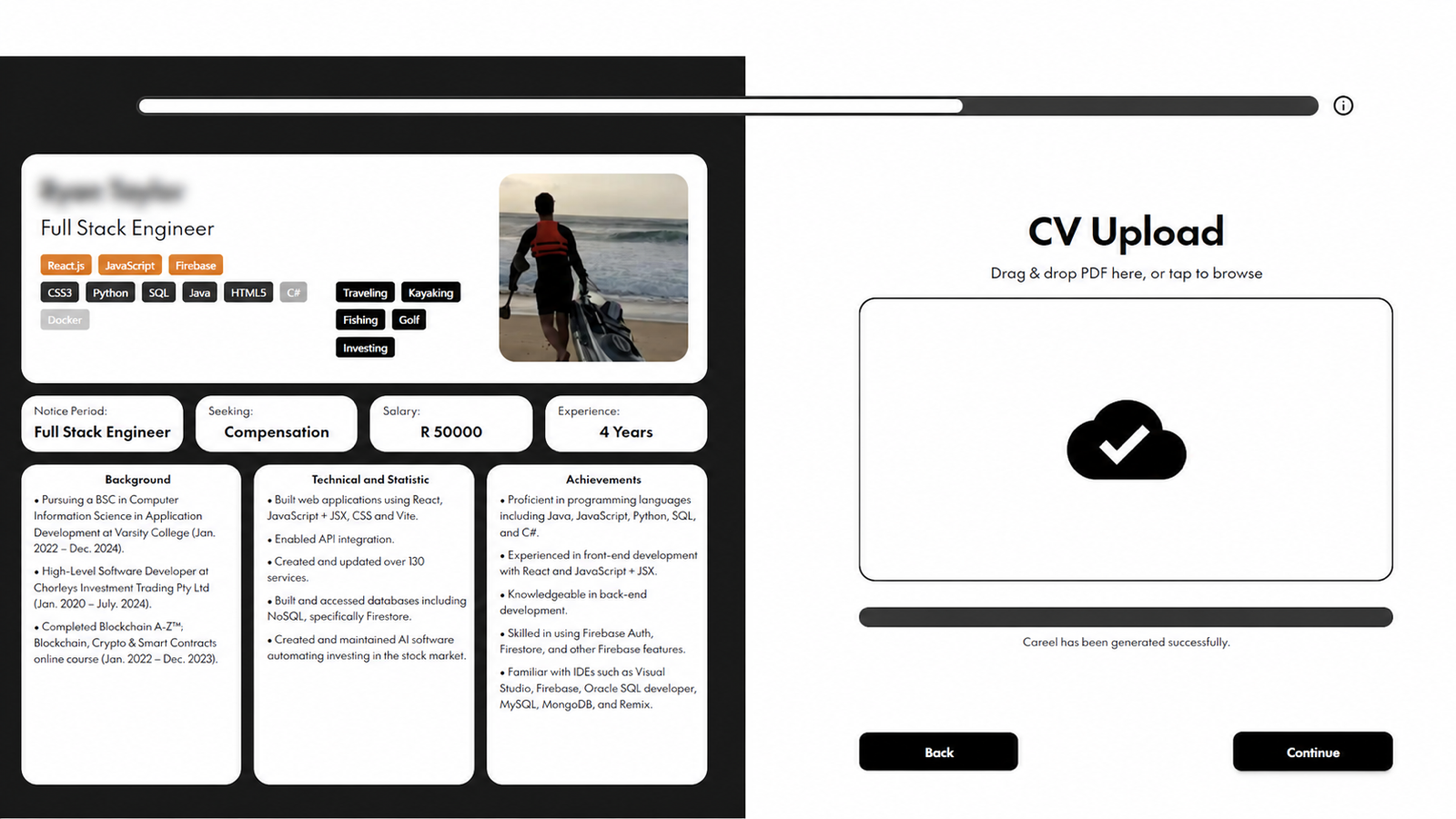
Another milestone was enabling a functional CV upload with live data. For the first time, the system could parse, process, and store actual candidate CVs. That was a major leap from placeholders and test data.
The Video Breakthrough
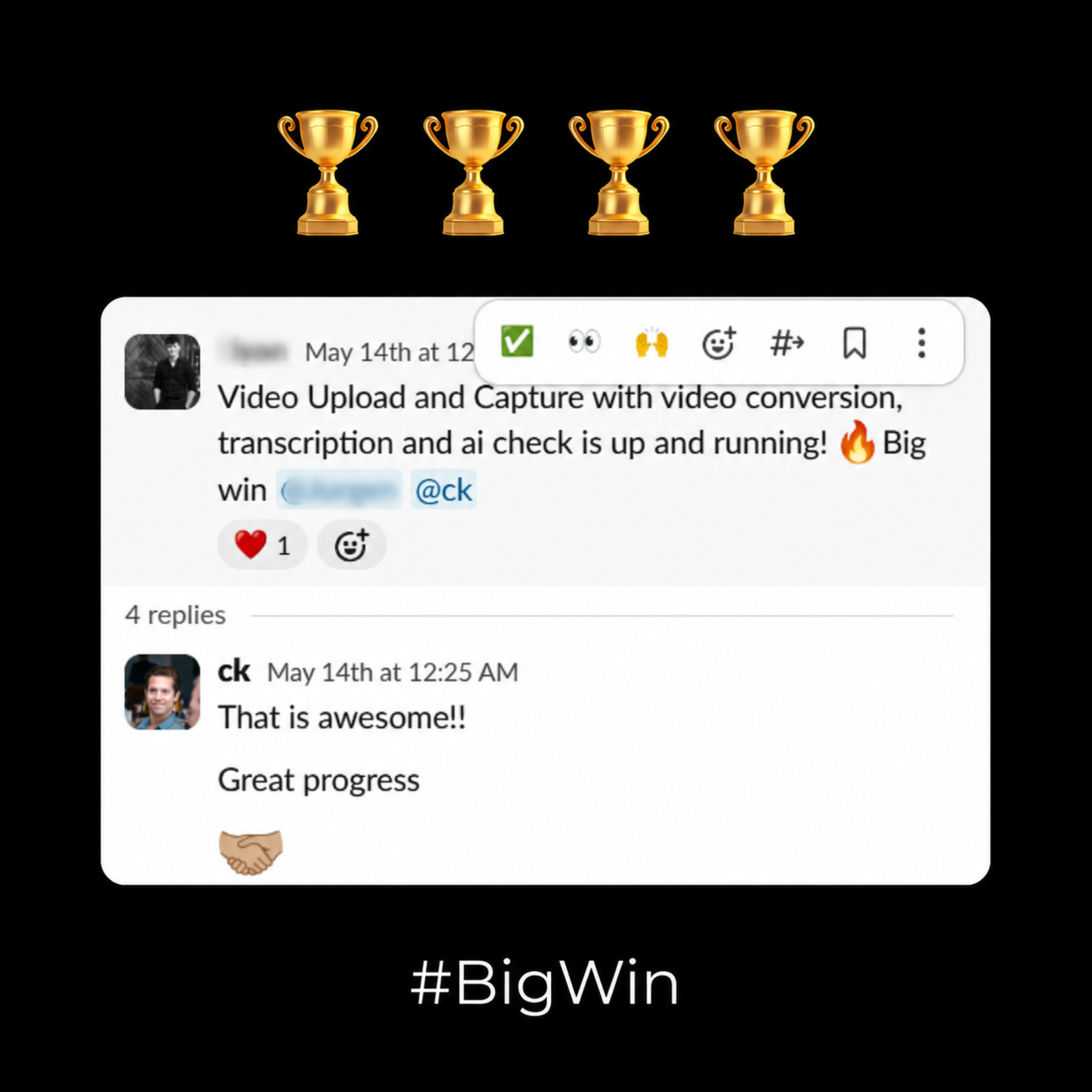
Perhaps the biggest technical achievement came mid-month: video upload, capture, conversion, transcription, and AI analysis all became fully operational.
This was a defining feature for ReelCV. Video let candidates show more than qualifications. It captured presence, communication style, and personality. AI-driven transcription and analysis turned that material into structured, searchable data. We knew we had a real breakthrough.
Smarter Profiles & Admin Controls
With the basics in place, attention turned to enhancing depth and usability:
- Ryan unveiled a profile rating system with skills assessment and experience editing, allowing recruiters to benchmark candidates quickly. The internal reaction said it all: this was a true “wow moment.”
- On the back end, the admin dashboard gained tools for monitoring, editing, and managing profiles at scale. That gave recruiters and the Hirexe team the control they needed to maintain high standards.
V2 Walkthrough
By the end of May, Ryan walked us through V2. The platform had moved far beyond its early wireframes. We now had a coherent candidate journey from signup and video to CV upload, recruiter search, and ratings.
Internal Testing & Feedback
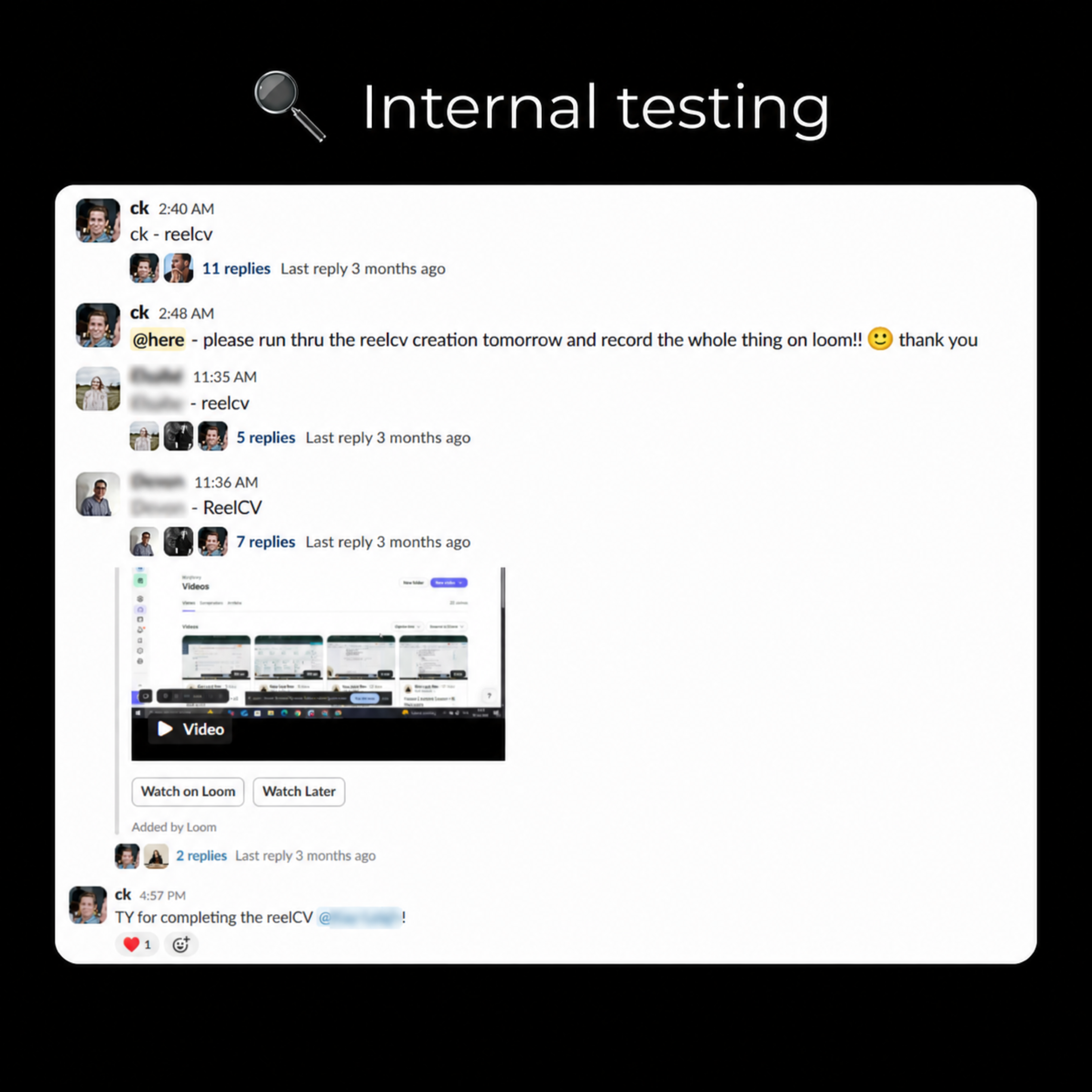
With so many core features working, we started internal signup testing. Members of the Hirexe team created profiles, uploaded CVs, recorded videos, and stepped into the shoes of future users. We shared feedback openly in Slack through quick videos and notes. Those test runs exposed pain points, validated design decisions, and gave us confidence that ReelCV was ready for wider trials.
Takeaway
May was when ReelCV truly came to life. Scattered features matured into a working product that we could test and celebrate. For the first time, we could see the product we had been building toward for months, not just imagine it.
June – Testing the Edges
By June, ReelCV was no longer just an internal build. We were testing it in real-world conditions. That meant progress, but it also exposed the inevitable roadblocks that appear when theory meets practice.
Roadblock: Video Uploads
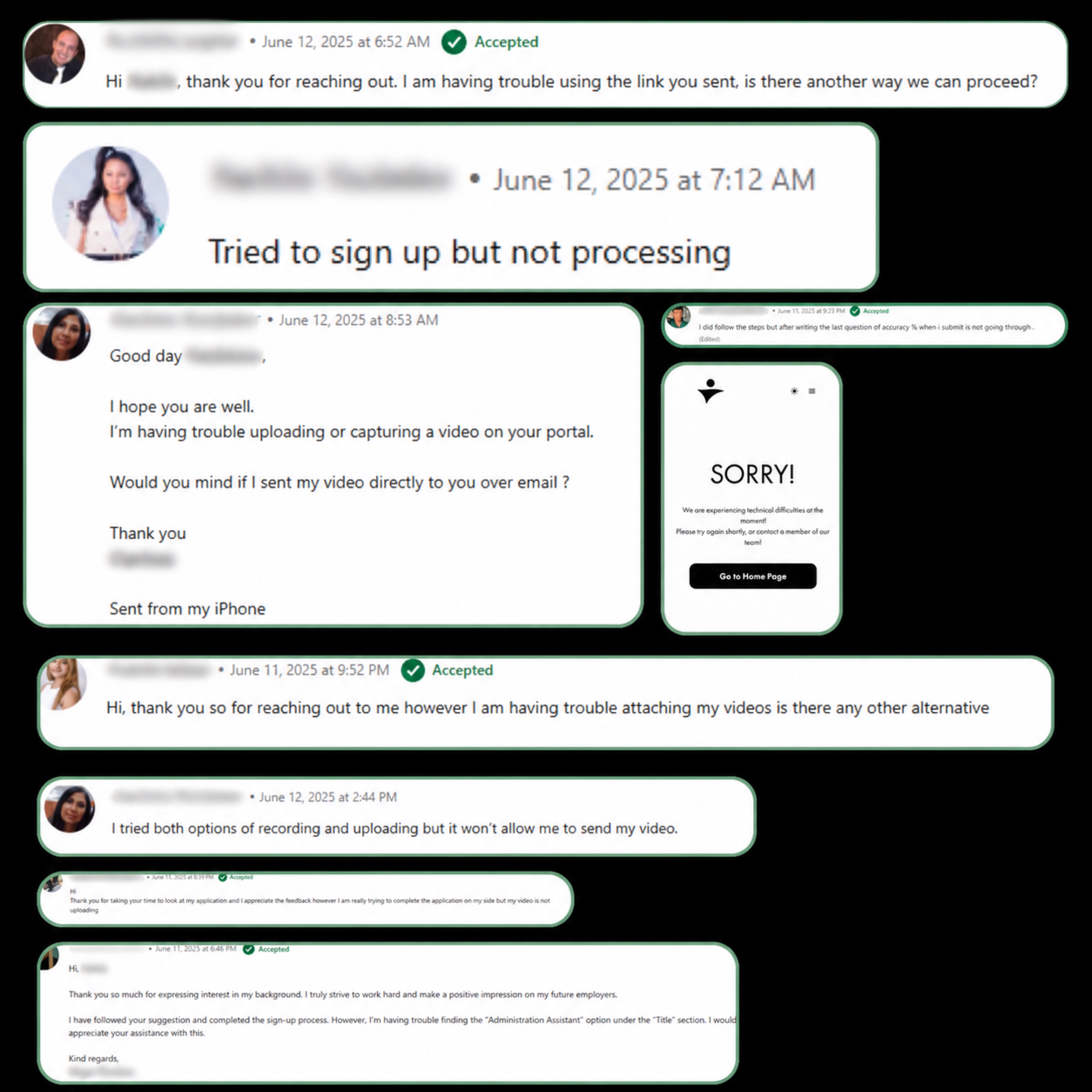
On June 12, we found a critical issue: the system was not accepting videos reliably. Because video sat at the center of ReelCV’s value proposition, we treated it as urgent and started working through fixes. It was a reminder that even the features we celebrated in May needed to hold up under real usage.
Applicant Feedback
June also brought the first wave of external applicant feedback. A handful of candidates tried the new signup process, and Ryan and Nakita captured their reactions through screenshots, notes, and direct comments in Slack. Not every reaction was glowing, but the feedback was invaluable. It validated what worked and showed us what still needed improvement.
The Search Feature
On June 20, Ryan demoed an early version of search. Recruiters could filter candidates by a mix of job title, skills, experience, and traits. It was our first real glimpse of how ReelCV could help MSPs move beyond keyword matching toward more holistic talent discovery.
Another Roadblock: Google Errors
We closed the month with another technical hurdle. On June 30, we hit a Google Console error that disrupted parts of the platform. It was frustrating, but it became another example of ReelCV’s resilience in progress. We tackled the issue quickly and rolled the fixes into later updates.
Takeaway
June was about stress-testing. The product was in users’ hands, we were watching real reactions, and the weak points were becoming obvious. Video upload and Google integration created setbacks, but we also gained authentic feedback, working search, and proof that ReelCV could handle the messy reality of live use.
July – Smoothing the Edges
July was about stability, refinement, and incremental wins. People were using the product more consistently, which kept exposing friction. We responded with targeted improvements.
Ongoing Roadblocks
We started the month with persistent Google Console issues that limited production capacity. We worked through quotas and production limits so new signups and CV uploads could continue without interruption.
Product Reviews & Positive Feedback
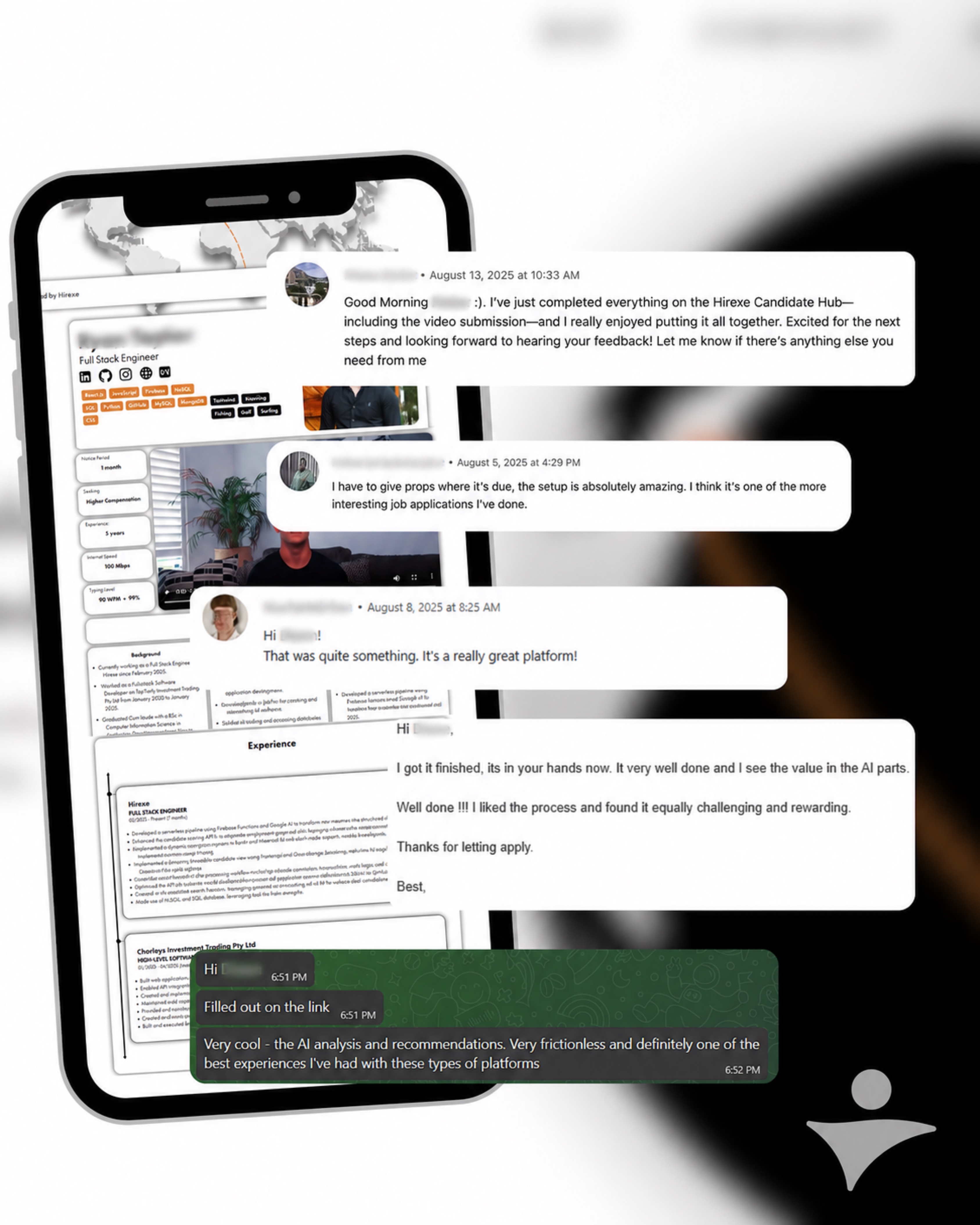
We ran product reviews on July 15, 22, and 28. Despite the technical issues, the results were encouraging. Feedback showed that usability and the overall experience were improving, validating the stabilization work we had done.
Production Deployments
A key focus for July was deploying solutions to recurring issues from prior months:
- ReelCV API Retry Logic: We introduced exponential-backoff retries of up to three attempts for profile-rating calls. Errors now trigger a Slack notification so we can monitor failures proactively.
Takeaway
July was a month of resilience and refinement. Google Console limitations persisted, but better monitoring, retry logic, and thoughtful feature updates kept people building ReelCVs without major disruption. Positive product reviews validated the work and showed us that ReelCV was becoming stable and dependable for both candidates and MSPs.
August 2025 – ReelCV Launch and Completion
August marked the official launch of ReelCV. We finalized workflows, tightened the user experience, and made sure the core features worked for both candidates and companies.
Product Enhancements & Deployment
By launch, we had refined onboarding, tightened registration and company creation, and rebuilt candidate search around a two-panel layout with server-side filters, sortable tables, and editable recruiter ratings. We also strengthened Firebase authentication, migrated company data, improved admin security, and completed the SQL-backend integration.
Testing & Feedback
We tested the platform internally, monitored signups, and captured feedback in Slack. We reviewed errors and edge cases quickly so the product was stable for public use. Positive reviews confirmed that the overall experience had improved.
Takeaway
ReelCV became the clearest real-world example of something I talk about constantly: crawl, walk, run, fly. We crawled with a rough AI-assisted mockup. We walked with a working V1. We ran by putting it in front of actual users and fixing what broke. By August, it felt like we were finally flying. It was the realest culmination of that philosophy I had ever experienced. Nothing happened in one brilliant leap. It came from six months of small decisions, broken uploads, honest feedback, and relentless iteration.

ReelCV was the foundation for the AI-powered search and matching experience we now use inside Hirexe.


