
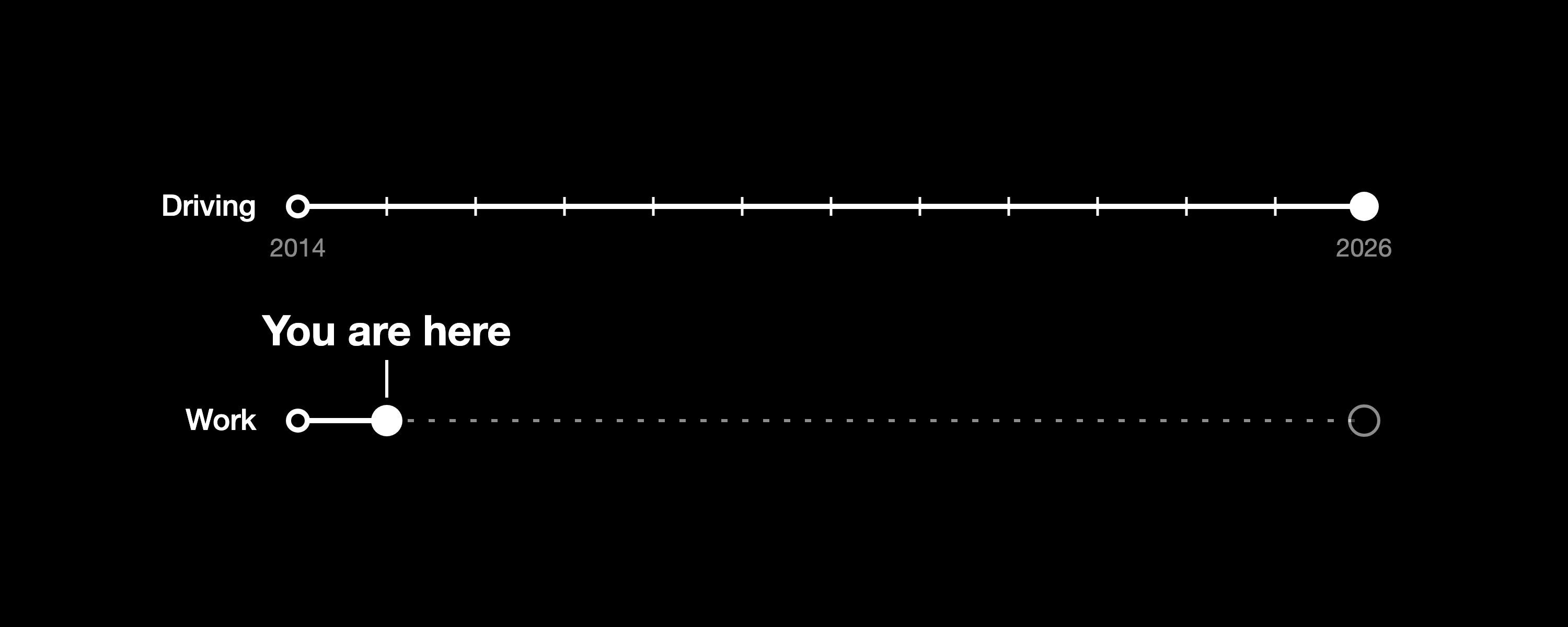
Driving is solved.
'Work' is a completely different story.
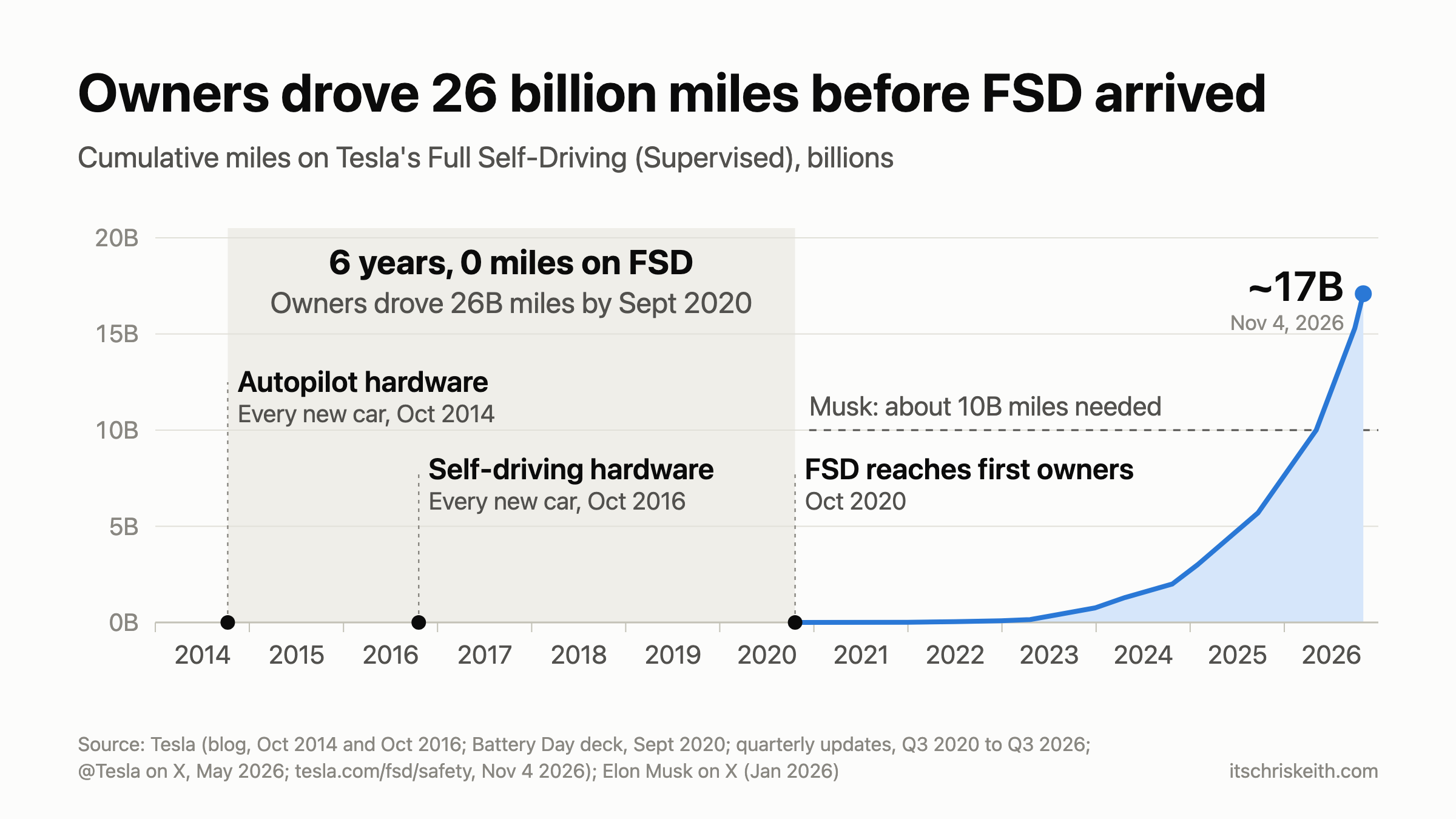
Tesla's cars have driven themselves 17 billion miles. Over Labor Day, a rented Tesla drove me 498 of the 500 miles on a road trip, and it felt like I was a passenger.
Elon Musk first put a date on it in 2013, when he said Teslas would drive "90 per cent of miles" within three years. By 2016 he was calling it "basically a solved problem."
It took thirteen years (ten more than he said), but driving is legit solved.
Owners sat behind the wheel for every one of those miles while the software drove, and every time one of them took over, the car learned where it had gone wrong. Musk puts the bar at roughly 10 billion miles of that before a Tesla can safely drive itself. The fleet passed it this spring, and Tesla still keeps an owner behind the wheel.
Even now, the rules are still catching up. New York law still requires a hand on the wheel, and only about two dozen states let a car drive itself with nobody in the driver's seat.
AI at work is on the same road...
But years behind.
Jobs are breaking down into tasks, and tasks are to work what miles are to driving.
AI has gotten good at three-second tasks and, for the most part, three-minute ones. The newest agents are making real progress on three-hour tasks, and that's where AI still needs work.
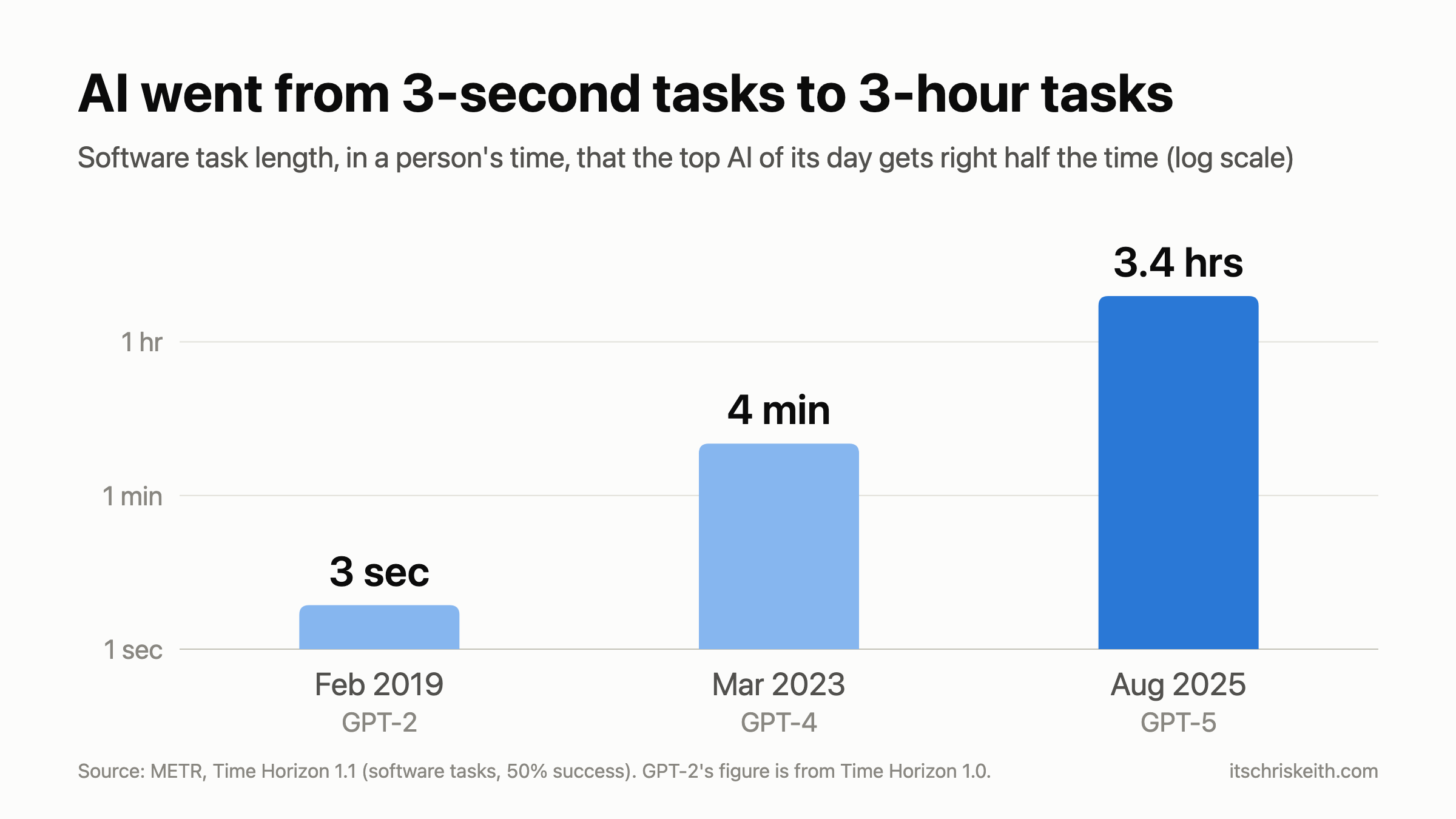
The models haven't driven the miles.
The labs know it, which is why they pay companies like Mercor billions a year to have experts show them how real work gets done. On a long task, the model does the work itself, and when it goes wrong an expert steps in and corrects it, the way a Tesla owner grabs the wheel.
AI at work is still on its learner's permit.
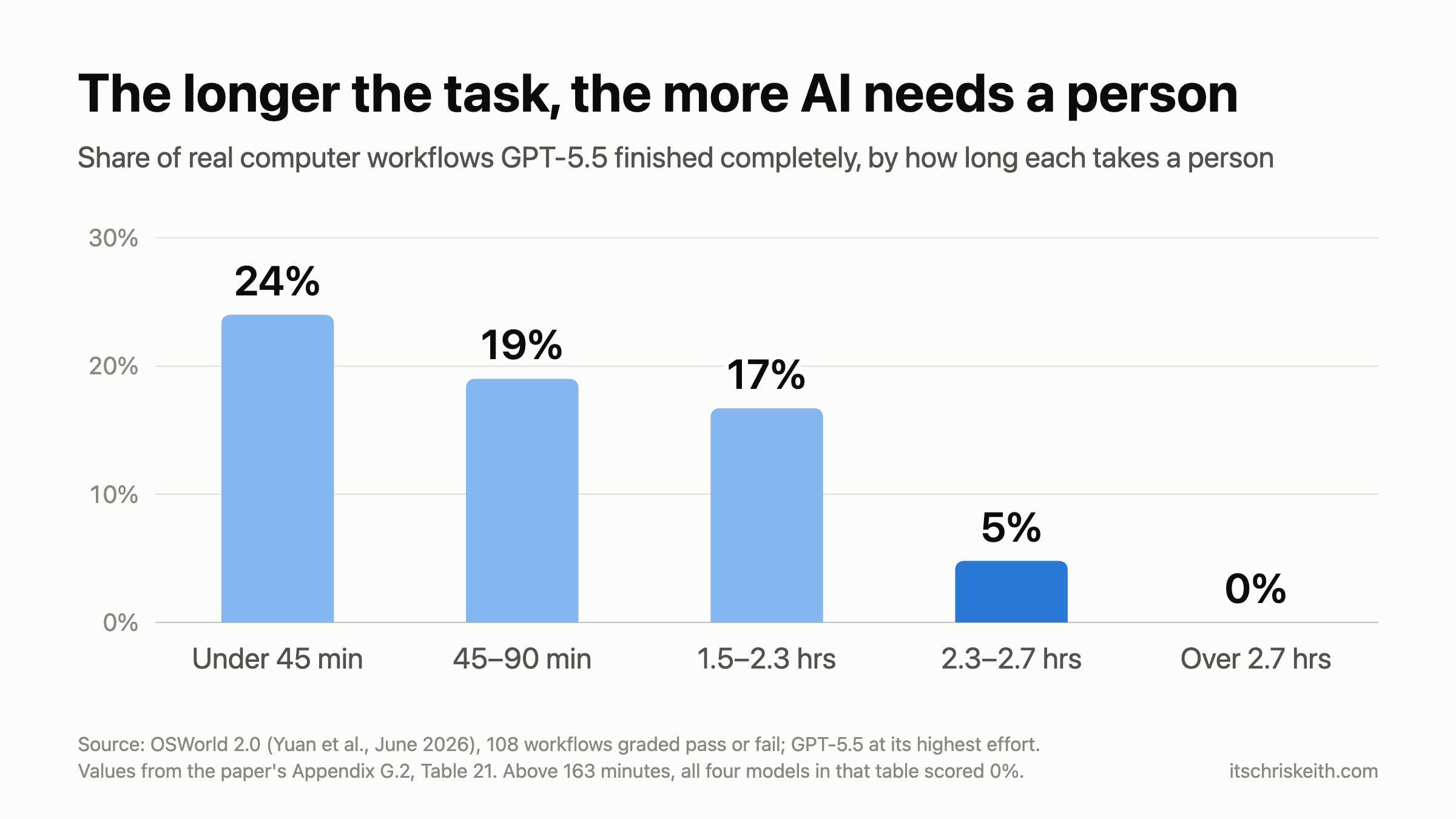
When OSWorld 2.0 tested four top models on real computer workflows, counting only the ones finished start to end, the best completed about one in four tasks that take a person under 45 minutes. Past about three hours, all four scored zero.
At work, the miles get driven inside real businesses, by the people doing the work every day.
Driving got solved one mile at a time, with people at the wheel the whole way.
'Work' will get there the same way, task by task, taught by the people already doing it.
The new luxury in a car is not having to drive.
At work, it's not having to do the tasks no human should be doing.
Humans don't have to 'drive' anymore -> but we still have to tell the car where to take us to get from point A to point B.
'Work' will be the same.
We won't have to do mundane 'tasks' (driving) -> but we'll still need to provide the final destination.


